Pay My Bill
 Call: (845) 454-0120
 Online Scheduling
Featured Doctor
Michelle Moyer, MD
Michelle Moyer, MD, is a board-certified orthopedic surgeon at OADC specializing in surgical and non-surgical treatment of the hand, wrist and elbow.
View Profile
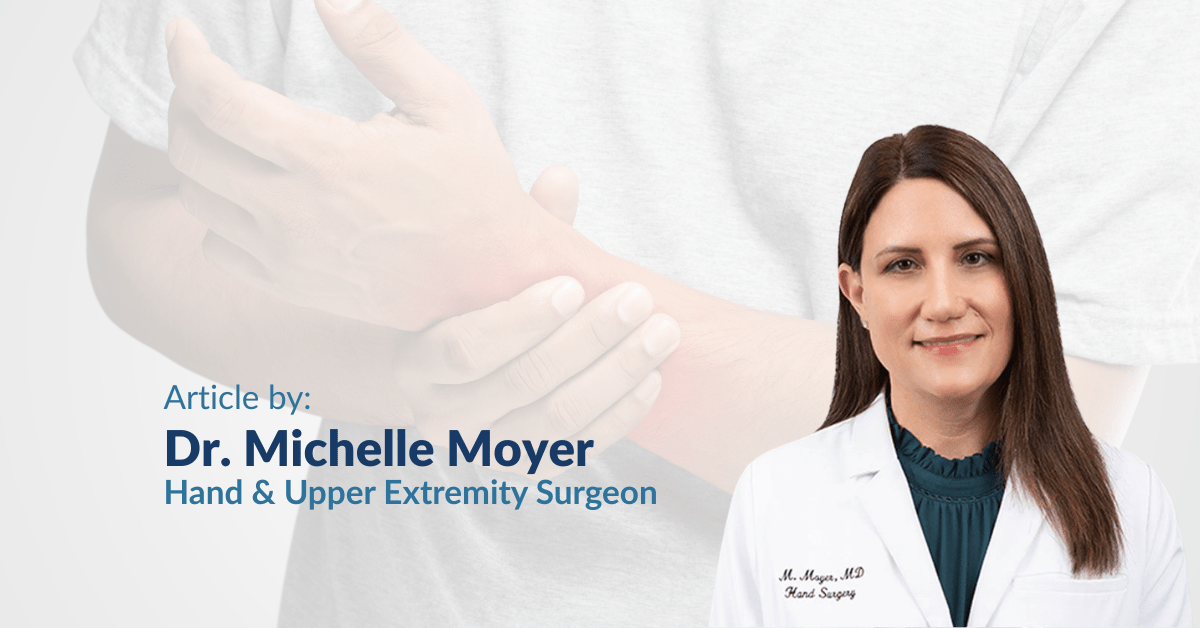
Repetitive strain injuries (RSIs) such as carpal tunnel syndrome, trigger finger, and tennis elbow are some of the most commonly treated orthopedic conditions, and are also commonly misunderstood. RSIs affect office workers, athletes, musicians, healthcare professionals, and anyone whose daily activities involve repeated motions. Here is the truth behind five misconceptions about RSIs:
1. RSIs Aren’t Just a “Desk Job” Problem
While many people associate typing and mouse use with conditions like carpal tunnel syndrome, RSIs can develop from any repetitive activity, from using hand tools to playing instruments to training at the gym. A specific job or hobby isn’t necessarily the cause of a patient’s RSI; it’s the repeated stress they place on the same muscles, tendons, and joints without adequate recovery time.
2. Pain Is Often a Late Warning Sign
Many patients are surprised to learn that pain is not always the first symptom. Early RSIs often present with stiffness, fatigue, tingling, weakness, or a feeling that the hand or arm “just isn’t working right.” Ignoring these subtle signs can allow inflammation or tendon damage to progress, making recovery longer and more complex.
3. Ergonomics Aren’t the Whole Answer
Good ergonomics, such as proper workstation setup, tool design, and posture are critical, but they’re only part of the solution. How often a patient takes breaks, the way they move, and how much load they place on the tissues in their joints are just as important. Even the most ergonomic setup can’t protect joints that are overused without recovery.
4. Chronic Tendon Conditions Aren’t Always Inflammation
Many chronic RSIs involve tendon degeneration rather than active inflammation. This distinction is important because treatment strategies differ depending on the patient’s symptoms. Rest alone may not be sufficient for a full recovery. Targeted therapy, activity modification, and the adjustment of biomechanics are often key to effective healing.
5. Treatment Doesn’t Have to Be Invasive
Seeing a specialist early allows for an accurate diagnosis and a plan tailored to the patient’s specific activity demands. Most RSIs can be managed successfully without surgery when addressed early, and some procedures to treat them can be performed in-office, such as steroid injections.
While repetitive strain injuries are common, keeping these facts in mind can help patients manage them appropriately or even avoid them altogether. Awareness, early action, and thoughtful use of your hands and arms can make a meaningful difference in long-term function and comfort.