Pay My Bill
 Call: (845) 454-0120
 Online Scheduling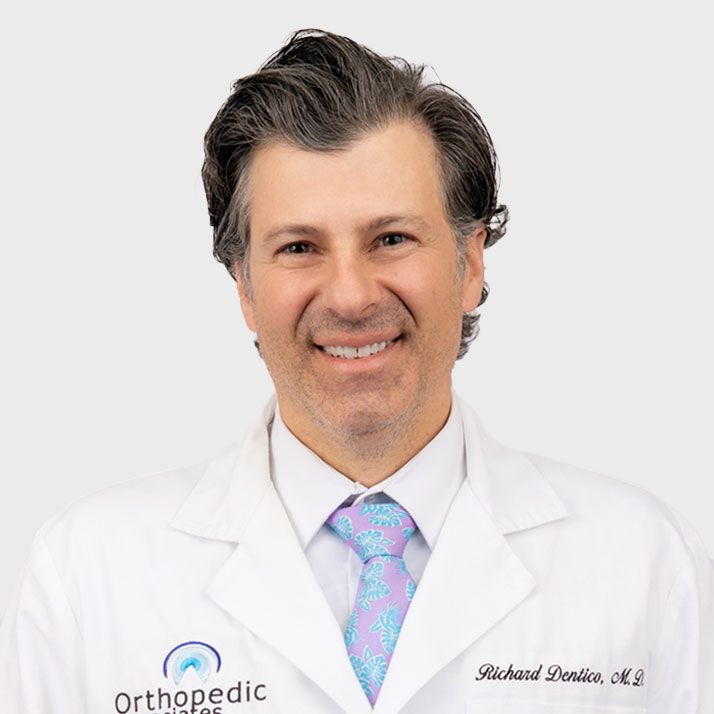
Featured Doctor
Richard Dentico, MD
Dr. Richard Dentico is a Pain Management Physician at OADC.
View Profile
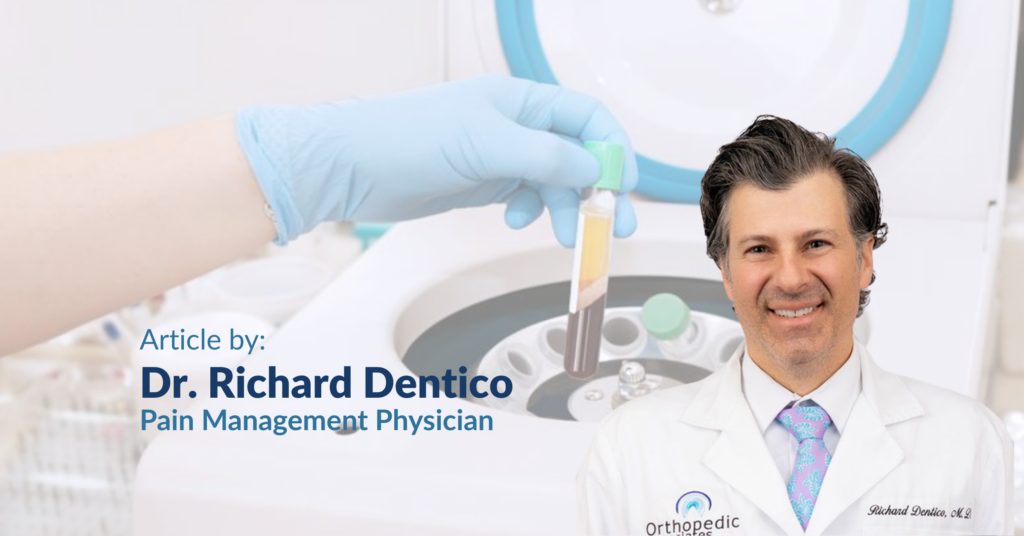
Learn more about orthobiologics and PRP with Dr. Richard Dentico, Pain Management Physician at OADC.
What is orthobiologics?
Orthobiologics, also referred to as regenerative medicine, uses a patient’s own biology to treat certain musculoskeletal conditions in a more natural way. Orthobiologics can help avoid or delay surgical intervention and may also serve as an adjunct to improve surgical outcomes. One of the most common orthobiologic treatments is platelet-rich plasma (PRP) therapy.
What is platelet-rich plasma (PRP) therapy?
PRP therapy involves drawing a patient’s blood and placing it in a centrifuge, a machine that separates the blood into components including platelet-rich plasma. Platelets contain numerous growth factors that play a crucial role in healing. This process concentrates platelets to levels far higher than typically found in the bloodstream. The PRP is then injected into the site of injury to stimulate the body’s natural healing process.
Is PRP new?
Several medical studies support the use of PRP for osteoarthritis, muscle, tendon, and ligament injuries. Data supports the efficacy of PRP therapy in improving symptoms and healing in cases such as partial-thickness rotator cuff tears, tendinopathies, and ligament injuries.
What conditions can be treated with PRP?
Numerous studies have evaluated PRP’s effectiveness, with the most promising results seen in soft tissue injuries. These include tendonitis, tendon tears, ligament sprains or tears, loose ligaments, and muscle tears. PRP has also shown effectiveness in treating cartilage degeneration, also known as arthritis.
- Shoulder: Rotator cuff tendinitis, impingement, bursitis, biceps tendinitis, labrum tears, arthritis, instability
- Elbow/Wrist/Hand: Tennis elbow, golfer’s elbow, DeQuervain’s tenosynovitis, trigger finger, arthritis, wrist and finger tendinitis
- Knee: Patellar tendinitis, partial ligament tears (ACL/LCL/MCL), meniscus tears, chondromalacia, arthritis
- Ankle: Achilles tendinitis, peroneal/posterior tibial tendinitis, ankle sprain, foot and ankle tendinitis
What do you like best about regenerative medicine as a treatment option?
Many patients experiencing joint pain may not be good candidates for surgery or may prefer to avoid it. Some do not experience sufficient relief with standard treatments, making it important to offer innovative options. Orthobiologics allows me to provide a safe alternative to surgery and other traditional treatments.
Why should I come to OADC for regenerative medicine treatments?
At OADC, regenerative medicine is part of a thoughtful, personalized approach to orthopedic care. Our team of highly trained orthopedic specialists brings deep expertise in the musculoskeletal system, ensuring that biologic treatments like platelet-rich plasma (PRP) are delivered safely and effectively.